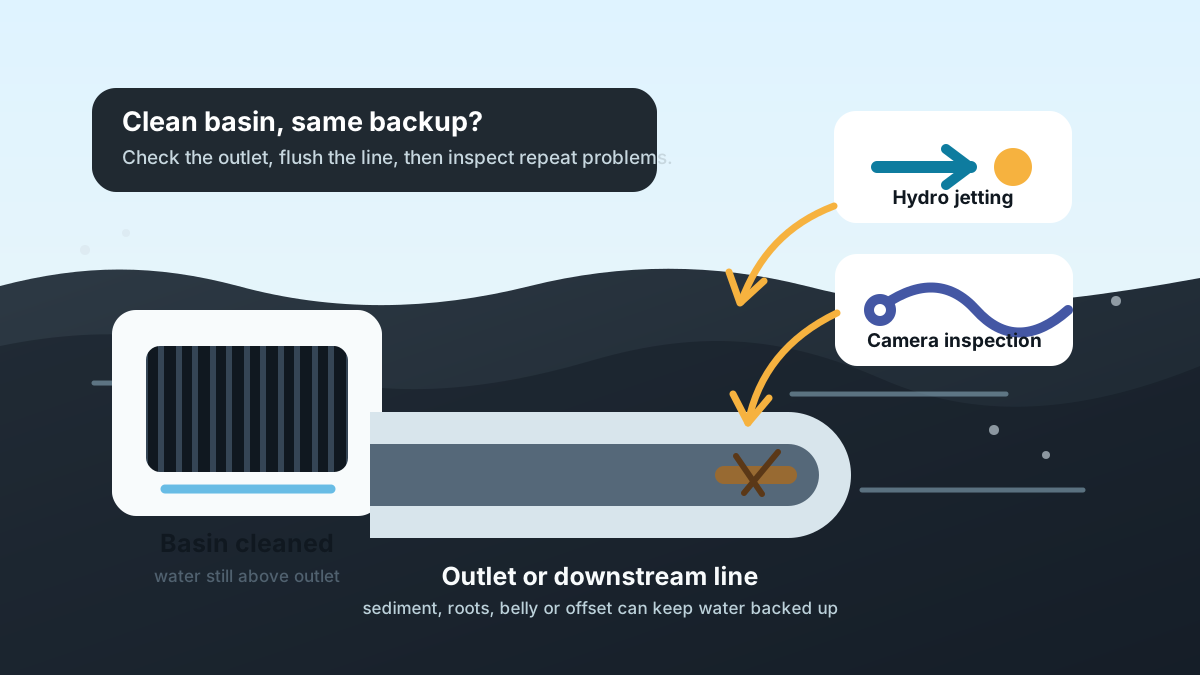
A freshly cleaned catch basin should have room to collect runoff and sediment again. But property managers sometimes see the same problem return right away: water sits around the grate, a parkade drain stays wet, the loading bay pools after normal rain, or the same storm drain backs up during the next heavy band of weather.
First, separate normal sump water from a drainage problem
Some catch basins are designed with a sump below the outlet. That lower area catches sand, leaves, gravel and sludge so it does not immediately move into the pipe. Water in the lowest part of the sump is not always a failure by itself.
The concern is different when water remains near the grate, sits above the outlet, floods the surrounding pavement, or returns immediately after the basin was emptied. In those cases, the basin may be clean but the water still cannot leave fast enough.
- Normal maintenance issue: sediment, leaves or garbage were filling the sump and vacuum cleaning restored capacity.
- Possible line issue: the sump was cleaned, but water still stands high or the outlet pipe will not move flow.
- Possible condition issue: the same drain has repeated backups after cleaning and flushing, suggesting the pipe route or pipe condition needs documentation.
Signs the outlet or downstream storm line is the real restriction
For Lower Mainland commercial, strata and industrial sites, repeated backups often show up at the lowest point on the property. That may be a catch basin near a loading bay, a trench drain at the bottom of a parkade ramp, a curb drain along a retail plaza, or a low basin in an industrial yard.
Watch for these clues after catch basin cleaning:
- water returns around the same grate during light or moderate rain;
- the basin looks clean from the surface but the outlet stays submerged;
- nearby drains gurgle, surge or push water back toward the same low point;
- sediment rings appear again shortly after the visit;
- the issue is worse during long rain events, not just during leaf or debris buildup;
- the site has roots, older private storm lines, recent paving, construction sediment or unknown drainage routing.
When hydro jetting or line flushing is the next step
Hydro jetting focuses on the pipe that carries water away from the basin. A jetting nozzle can help cut through compacted sediment, root intrusion, leaf mats and debris that vacuum cleaning from the basin alone cannot reach. On many properties, a combined approach is best: remove the basin material, flush the outlet, and use vacuum extraction so loosened debris does not simply move to the next low point.
This is especially useful when a site has parking-lot flooding in Surrey, slow parkade outlets in Burnaby or New Westminster, flat commercial lots in Richmond, or industrial yard drainage problems in Delta. Flat sites and long private storm runs can hide a restriction until the next heavy rain shows where water is backing up.
When camera inspection and locating are worth adding
A camera inspection becomes more valuable when the same drain keeps failing after reasonable cleaning and flushing. It helps move the conversation from “the drain is blocked again” to “this is what is happening inside the pipe.”
Camera inspection can help document:
- root intrusion entering through joints or breaks;
- offset joints that catch debris and create repeat blockages;
- pipe bellies where water and sediment sit instead of flowing;
- crushed or cracked pipe that may need repair planning;
- unknown routing where a private storm line needs tracing before excavation, repair or future maintenance.
For strata councils and facility managers, the practical benefit is documentation. A camera run and locate can help decide whether the next action is more maintenance, targeted drainage repair planning, or a better seasonal cleaning schedule.
Where repeat backups usually deserve priority
Not every slow drain has the same risk. Prioritize locations where standing water can interrupt tenants, customers, trucks or building systems.
- Parkade ramps and trench drains: water can move toward elevators, storage rooms, mechanical rooms or tenant routes.
- Loading bays: pooled water can block deliveries and push sediment into downstream lines.
- Retail and commercial parking lots: customers and pedestrians notice flooding quickly, and repeat pooling can damage pavement.
- Industrial yards: sediment, gravel and debris from operations can fill basins and storm lines faster than expected.
- Low street-facing basins: runoff from curb lines, trees and traffic can overwhelm a private connection during heavy rain.
Dense sites in Vancouver, Coquitlam, New Westminster and Burnaby often have tight access or older private drainage routes. Clear access notes and a known problem location can save time on site.
What to include when booking the follow-up visit
When you use the service request form, include enough information for dispatch to decide whether the site needs cleaning only, cleaning plus jetting, or jetting with camera inspection. Helpful notes include:
- the site address, city and exact problem location;
- whether the basin was recently cleaned and when;
- whether water is standing at the grate, above the outlet or only in the lower sump;
- photos of the basin, water level, outlet and surrounding pooling area if available;
- parkade clearance, gate access, hose routing or loading-bay restrictions;
- whether flooding threatens doors, electrical rooms, elevators, loading areas or pedestrian routes;
- any history of roots, construction sediment, paving work or repeat backups.
How to reduce repeat callouts before the next rain cycle
The best maintenance plan depends on what the crew finds. If the basin was simply full, schedule cleaning before heavy rain season and after major leaf drop or construction work. If sediment is moving downstream, pair cleaning with line flushing. If the same drain still backs up after that, document the pipe with camera inspection before spending money on repeated emergency visits.
Related maintenance guides can help with planning: the parking lot drain cleaning checklist covers pre-rain site walks, the parkade drain cleaning guide focuses on strata and commercial building access, and the catch basin cleaning frequency guide explains annual and twice-per-year service triggers.
Clean basin, same backup?
Book the next diagnostic step before the next heavy rain.
Lower Mainland Catch Basin Service can help with catch basin cleaning, hydro jetting / line flushing, camera inspections, private drainage locates and practical repair coordination for commercial, strata and industrial properties.