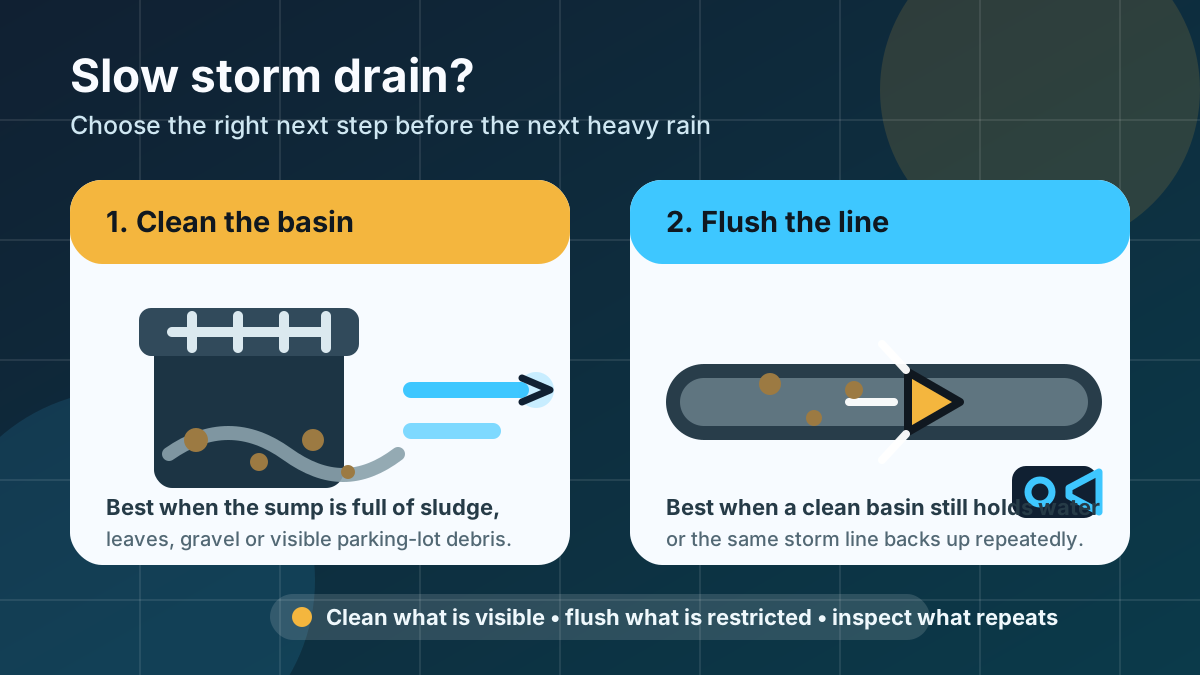
When water sits over a parking lot drain after rain, the problem is not always the grate you can see. The catch basin may be full of leaves, gravel and sludge. The outlet pipe may be packed with sediment. A downstream storm line may be root-bound, sagging, crushed or partly collapsed. Choosing the right service saves time and helps avoid paying for the same temporary cleanout twice.
Start by separating the basin from the line
A catch basin is a collection point. It captures runoff from parking lots, private roads, parkades, loading bays and landscaped areas. The basin sump is designed to hold sediment so it does not immediately move downstream. Cleaning removes the material inside the basin and restores storage capacity.
The outlet line is the pipe that carries water away from that basin. If the outlet is restricted, the basin can be clean and still hold water. This is why a property manager may see a basin pumped out one month and standing water return after the next heavy rain.
When catch basin cleaning is usually the right first step
For many Lower Mainland properties, routine catch basin cleaning is the practical first step before the rainy season. Cleaning is usually the right starting point when the grate is covered with leaves, the sump is full of sand or sludge, the parking lot has tracked-in gravel, or the basin has not been serviced in the last year.
Catch basin cleaning is also the logical first move when a property has several low-risk basins that need preventative maintenance before fall storms. The goal is to remove the visible load before it migrates into the storm line. For strata, retail, industrial and commercial sites, this can be scheduled as part of an annual or twice-yearly maintenance plan.
When hydro jetting or line flushing should be scoped
Hydro jetting addresses the pipe beyond the basin. High-pressure water is used to cut through compacted sediment, roots and debris inside the line, while vacuum extraction can capture displaced material so it does not simply move to the next low point.
Ask about jetting when the basin refills quickly after cleaning, water stays high after the sump is empty, multiple basins on the same side of a lot back up together, or a parkade trench drain flows slowly even after surface debris is removed. These signs point to a restricted outlet or downstream storm line rather than a simple full basin.
This is especially common around loading bays, older asphalt lots, treed properties, parkade ramps and sites with heavy sediment from construction traffic. If the outlet is the restriction, another basic cleanout may buy a short window but it will not confirm that the line can carry water during the next storm.
When camera inspection becomes worth it
Camera inspection is not needed for every slow drain. It becomes useful when the same line keeps backing up, when a clean basin still holds water, when a repair budget is being considered, or when the pipe route needs to be located before digging, paving or landscaping work.
A camera run after jetting can show root intrusion, offset joints, bellies that hold sediment, cracked pipe, collapsed sections or foreign material. For a property manager or strata council, that information changes the conversation from “the drain is slow again” to “this is the section that needs monitoring, jetting or repair.” The cleaned-but-still-holding-water guide explains those repeat-backup triggers in more detail.
A simple decision table for property managers
What details to send with a service request
Good request details help dispatch decide whether to scope cleaning only, jetting, camera inspection or a combined visit. Include the property type, city, basin or drain count, photos, where water pools, whether the issue is active or recurring, and whether the basin was recently cleaned.
For parkades, add clearance, ramp access, gate or fob notes and which level is affected. For exterior lots, include the nearest storefront, loading bay, driveway, landscaped area or catch basin number if the site has a map. The catch basin quote-prep guide has a broader checklist for building a clean request.
Seasonal timing in the Lower Mainland
Late spring and summer are useful planning windows because crews can inspect drains before the fall rush and before heavy rain exposes every weak point at once. Properties in Burnaby, Richmond, Surrey, Langley, Delta, Coquitlam, Port Coquitlam, Vancouver and New Westminster often have different drainage layouts, but the same sequence applies: clean what is visible, flush what is restricted, inspect what repeats.
If the property has already had a rain-related complaint this year, do not wait for the next atmospheric river forecast to start planning. A dry-weather visit can still identify full basins, slow outlets and repeat-risk lines before tenants or customers are stepping through standing water.
How to avoid paying for the wrong service twice
The best approach is not “always clean first” or “always jet first.” The best approach is to describe the symptom and service history clearly. A basin that has not been cleaned in years needs cleaning. A cleaned basin that still holds water needs line-flow troubleshooting. A line that blocks every few months needs inspection evidence before anyone discusses repair.
For active flooding, water moving toward doors, parkade elevator lobbies, electrical rooms or busy vehicle routes, call instead of relying only on a form. For planned work, use the online request to send site details and note whether photos are available; dispatch can confirm how to share them during follow-up.
FAQ: catch basin cleaning, hydro jetting and slow storm drains
Can hydro jetting replace catch basin cleaning?
No. Jetting clears restrictions in the line. The basin still needs vacuum cleaning when its sump is full of sediment, leaves, gravel or sludge.
Should a camera inspection happen before or after jetting?
For blocked or dirty lines, camera inspection is often most useful after jetting because visibility is better and the line condition can be documented more clearly.
What if only one parking lot drain is slow?
One slow drain may be a full basin, a blocked outlet or a low spot that collects sediment. Photos, basin condition and service history help decide the first step.
Is this only for commercial properties?
No. The same decision process helps strata sites, industrial yards, retail plazas, parkades, private roads and other Lower Mainland properties with private storm drainage.
Slow storm drain or repeat backup?
Request the right scope before the next rain.
Lower Mainland Catch Basin Service can help with catch basin cleaning, hydro jetting / line flushing, camera inspections, private drainage locates and practical repair coordination for strata, commercial, industrial and construction sites.