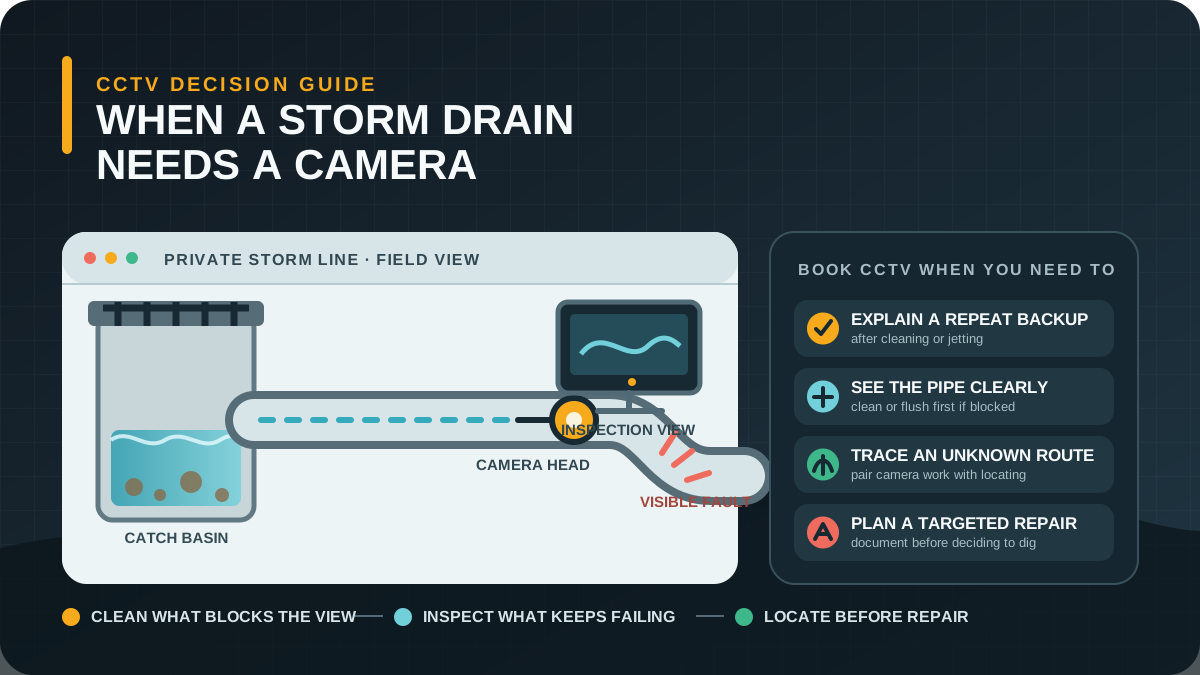
A storm drain camera inspection answers a different question from cleaning. Vacuum cleaning removes leaves, gravel, sediment and sludge from a catch basin. Hydro jetting or line flushing clears material from an outlet or connected pipe. A CCTV storm drain inspection documents what can be seen inside an accessible line so a property manager can make the next maintenance or repair decision with better evidence.
What a storm drain camera inspection can—and cannot—do
A push camera can help document visible conditions such as lodged debris, root entry, separated or offset joints, cracks, a deformed section, standing water in a low area, and the point where travel becomes blocked. When paired with locating equipment, it may also help trace the route and approximate position of an accessible private drainage line.
It does not clean the pipe, guarantee that every section can be reached, prove how the entire system performs during a design storm, or replace a formal engineering survey. Access point, pipe diameter, bends, water clarity and the condition of the line all affect what can be inspected. That is why the symptom history and cleaning sequence matter.
1. The same drain backs up after cleaning or jetting
A repeat problem is the clearest reason to move from routine maintenance to diagnosis. If catch basin cleaning removed the sump material and line flushing restored flow, but the same location backs up again, something may be catching debris or holding water downstream.
The camera may reveal a recurring obstruction point, root entry, a joint that is out of alignment, a damaged section or a low area where sediment settles. It may also show that the accessible section looks open, which is useful because the next investigation can move beyond another identical cleanout. Record the dates of the previous services and how quickly the problem returned.
2. A clean catch basin still holds water near the outlet
Some water can remain in the sump below a catch basin outlet by design. The stronger warning is water remaining high near the outlet or grate after the basin itself has been emptied. That pattern points beyond the material stored in the sump.
Start by confirming whether the outlet can be cleared with line flushing. If water remains high after a reasonable cleaning attempt, camera inspection can help determine where the line stops carrying water normally. The related guide on a cleaned catch basin that still holds water explains this service sequence in more detail.
3. Several drains on the same run slow down together
When one grate is slow, the issue may be local to that basin. When several catch basins, trench drains or low points respond at the same time, the shared downstream line deserves attention. Property managers often notice this as surging between drains, water appearing at the lowest grate, or multiple basins clearing at the same slow rate after rain.
A site sketch is valuable here. Mark which drains fail together, which clear normally and where water finally exits the property if known. A camera and private-line locate can help test the suspected route rather than treating every grate as a separate blockage.
4. Roots or sediment keep returning in the same place
Roots and sediment are symptoms as well as material to remove. If roots repeatedly enter at one point, a joint or break may need repair planning. If grit repeatedly collects in a low section, the pipe may have a grade or alignment issue—or the site may simply be sending an unusually high sediment load into the line.
Inspection evidence helps separate those possibilities. The camera should be used only after enough material has been removed to see the pipe wall. A muddy image taken through standing water may confirm that access is restricted, but it may not answer why the restriction keeps returning.
5. The private drainage route is unknown
Older commercial and strata properties do not always have a current drainage plan. Renovations, additions, repaving and past repairs can also make an old drawing unreliable. If no one knows which catch basins connect, where a private line turns or where it terminates, repeated cleaning can become guesswork.
Camera inspection combined with private drainage tracing and locate support can help establish a practical maintenance map. Marking accessible reference points is particularly useful before paving, landscaping or targeted excavation. It is not a substitute for utility clearance or an engineered survey, but it can narrow the drainage route that needs further work.
6. Pavement settlement, a sinkhole or a damaged outlet appears
Surface settlement beside a catch basin, a new void, a broken frame, soil entering the structure or visible outlet damage can indicate a physical failure rather than a cleaning problem. Keep people and vehicles away from an unstable area and arrange a prompt assessment.
Where access is safe and the line can be reached, camera inspection and locating may help document the affected section before drainage repair planning. Do not wait for CCTV if the ground is actively collapsing or water is entering a building; call and describe the immediate site hazard first.
7. A repair, excavation or paving decision needs evidence
Camera inspection is valuable before spending money on an uncertain repair. A property manager may need to know whether the likely problem is near one outlet, farther along a private storm run, or not visible from the available access point. Locating the camera head where feasible can give a contractor a more focused starting area.
Ask what documentation is needed before booking. A concise findings summary may be enough for routine maintenance. A strata council, insurer or repair contractor may want footage or specific reference points. Stating that requirement in advance helps the crew scope the visit and avoids assuming that every inspection package is identical.
Should the line be cleaned before the camera goes in?
Not every visit needs cleaning, jetting and CCTV. Describe what happened and what has already been tried. The crew can then sequence the likely first step and keep any additional work tied to site conditions.
What to send with a Lower Mainland camera inspection request
A useful service request gives dispatch enough context to assess access, cleaning and locating needs. Include:
- Property address, city and the best site entrance.
- The exact catch basin, trench drain, parkade level or loading-bay location.
- What happens during rain and how long water remains afterward.
- Dates and scope of the last vacuum cleaning, hydro jetting or repair.
- Whether one drain or several connected drains are affected.
- Any available drainage drawings, basin numbers or known cleanouts.
- Parkade clearance, gates, parked vehicles, loading windows and other access limits.
- Whether a findings summary, footage or locating support is needed for a specific decision.
Safe surface photos and after-rain video can help, but staff should not lift heavy grates, enter a basin or stand in traffic or moving water to collect them. For active water near a doorway, elevator lobby, electrical room or busy vehicle route, phone first.
Why late summer is a useful inspection window
Late summer gives Lower Mainland property managers time to investigate a repeat fault before sustained fall rain makes access and scheduling harder. It is also a practical window to clean the basin, flush the line, document a recurring problem and plan a targeted repair rather than discovering the same failure during the next major storm.
Commercial, strata and industrial storm-drain support is available in Port Coquitlam, Coquitlam, Burnaby, New Westminster, Vancouver, Richmond, Surrey, Delta and Langley, along with nearby Lower Mainland service areas.
FAQ: CCTV storm drain inspections
Can a camera enter through a catch basin outlet?
Sometimes. Feasibility depends on safe access, pipe size, bends, water level and the condition of the outlet. Share photos or dimensions if known so the likely access path can be discussed before dispatch.
Does camera inspection clear a storm drain blockage?
No. CCTV documents visible conditions; vacuum cleaning and hydro jetting remove material. A blocked line may need to be opened before the camera can travel far enough to produce useful evidence.
Is camera inspection always needed after hydro jetting?
No. A one-time sediment blockage that clears and does not return may not need CCTV. Inspection becomes more valuable when the fault repeats, the route is unknown or a repair decision depends on pipe-condition evidence.
Can the camera locate the exact depth of a private storm line?
Locating equipment may help establish an approximate route and depth where conditions allow. Confirm the required accuracy when booking; camera locating is not a formal survey or a replacement for required utility-clearance procedures.
Same storm drain failing again?
Document the problem before paying for another identical cleanout.
Send the site address, affected drain, service history, access notes and the decision the inspection needs to support. Lower Mainland Catch Basin Service can scope cleaning, hydro jetting, CCTV inspection, private line locating and practical repair coordination.