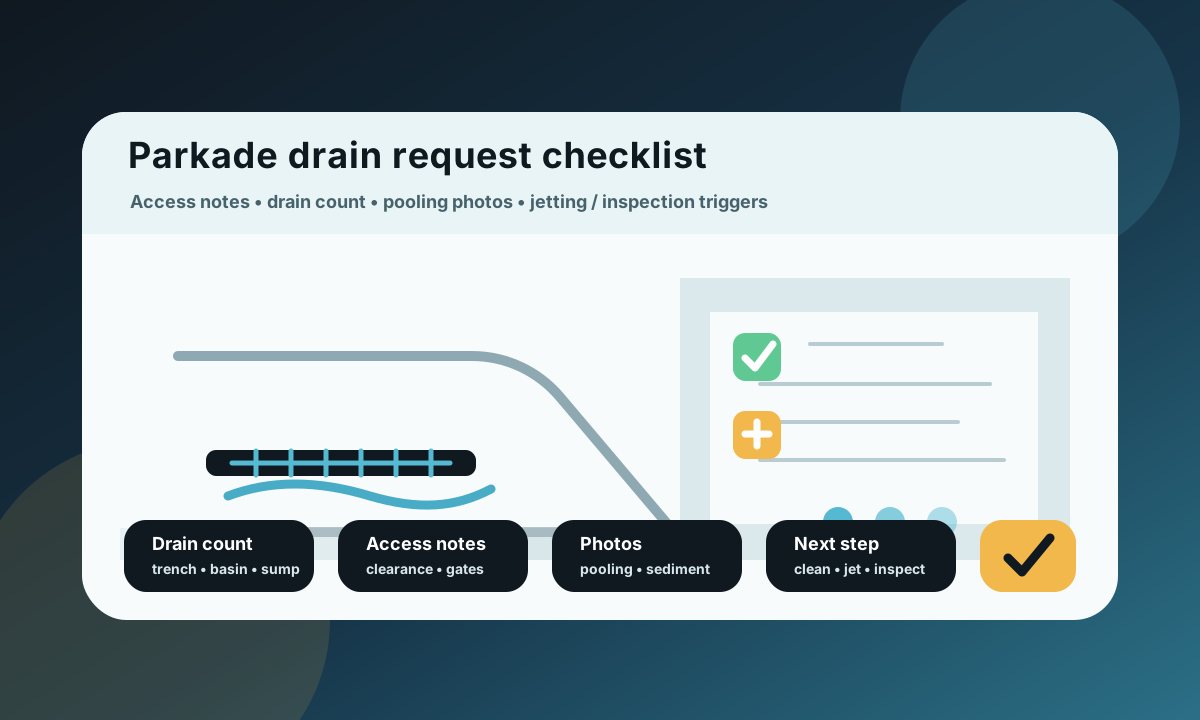
Parkade drain problems can look simple from a distance: water pooling at a ramp, a trench drain full of grit, or a low-point floor drain that stays wet after rain. For a strata manager, the useful question is not only “can someone clean this?” It is “what information will help the crew arrive with the right service plan?”
Why parkade requests need more detail than exterior catch basins
Exterior catch basins in a parking lot are usually visible from a driveway or lane. Parkade drains can be harder to scope. A crew may need to work around gate access, entry clearance, hose routing, resident parking, ramp slope, sprinkler rooms, elevator lobbies, loading bays, storage areas and tenant notice windows.
Good request details help separate routine cleaning from repeat-backup diagnosis. They also help avoid a mismatch between what the building expects and what the first visit can realistically do. A clear checklist is especially useful for strata councils, property managers and facility teams in dense Lower Mainland buildings where underground parking access changes from site to site.
The parkade drain cleaning request checklist
1. Building address, parkade entrance and level
Start with the full address, but do not stop there. Include the parkade entrance street, gate or ramp location, level number, nearest elevator core, loading bay, garbage room or landmark. If there are multiple entrances, note which entrance should be used and which one should be avoided.
2. Approximate drain, trench drain and catch basin count
A rough count is enough to improve dispatch notes. List trench drains at ramp bottoms, floor drains, catch basins, low-point grates and any sump or drain room connected to the problem. If the count is unknown, group by zone: “two trench drains at P1 ramp, three low-point grates near elevator 2, one basin near garbage room.”
3. Access hours, tenant notice and parking controls
Parkade work often needs coordination. Note strata-approved access hours, concierge or building manager contact, loading-zone rules, parking stall conflicts, gate codes, fob requirements and whether residents or tenants need advance notice. If the job must happen before a forecasted rain period, say so clearly.
4. Clearance, tight turns and hose-routing constraints
Do not assume every truck or hose route can reach every underground location. Include posted clearance height, steep ramps, tight turns, bollards, speed bumps, garage doors, loading bay restrictions and how far the problem drain is from the safest working location. This helps the team plan equipment positioning without the building making unverified assumptions.
5. Pooling locations and what the water threatens
Describe where water goes when the drain is slow. A puddle in an unused corner is different from water moving toward an elevator lobby, electrical room, mechanical room, tenant storage, doorway, accessible route, loading dock or parkade ramp. The higher the consequence, the more important it is to phone as well as submit the online request.
6. Photos, short video and timing after rainfall
Photos of sediment rings, debris, standing water, ramp drains and nearby room signs are useful. If safe, include a short video showing how water moves across the floor. Note whether the photo was taken during heavy rain, the morning after rain, after sweeping, or after a previous cleaning. Timing helps distinguish a clogged sump from a slow downstream outlet.
7. Service history and repeat-backup pattern
Include the last known cleaning date, whether the same drain filled again quickly, and whether hydro jetting, camera inspection or repairs have already been tried. If a drain was cleaned and still held water, the next step may be downstream line flushing or inspection rather than another surface cleanout only.
When the request should mention hydro jetting or camera inspection
Parkade drain cleaning removes sediment, grit, leaves, garbage and sludge from the drain body, trench or catch basin. It may not solve a restricted outlet line. Ask about adding hydro jetting / line flushing when water remains high after cleaning, several drains back up along the same run, or the issue returns after moderate rain.
Ask about camera inspection and locating when the outlet route is unknown, the same line has repeated problems, a repair decision is being discussed, or strata council needs documentation before approving a larger scope. The cleaned-but-still-holding-water guide explains those triggers in more detail.
A sample request note a strata manager can adapt
Use plain language. The best request note is specific without trying to diagnose every cause:
This kind of note gives enough detail for triage while still leaving final recommendations to the service team.
Where this checklist is most useful across the Lower Mainland
Parkade access and drainage risk vary by building type. Mixed-use buildings in Burnaby, dense strata towers in Vancouver, flat lots and commercial parkades in Richmond, older buildings in New Westminster, and strata or commercial properties in Coquitlam, Port Coquitlam and Surrey all benefit from detailed access and drain-count notes before the crew is dispatched.
The same checklist also helps when parkade drains connect to exterior catch basins, loading bays or private storm lines. If the issue includes outside lot drains as well as underground drains, mention both so the request can be scoped as a full drainage visit instead of a single drain call.
What to do for active water or building-risk locations
Use the online request form for planned service, maintenance scheduling and non-urgent checklist details. Phone first if water is active near elevators, electrical rooms, mechanical rooms, tenant doors, storage lockers, accessibility routes or busy vehicle ramps. A form is helpful, but active water needs faster triage.
If water is already moving toward sensitive areas, keep people away from unsafe water, do not remove heavy covers, and do not enter confined or restricted spaces. Send photos from a safe distance and provide building access details when calling.
How this connects to a maintenance plan
A single parkade cleaning request can also start a better maintenance schedule. After the first service, keep notes on which drains had heavy sediment, which outlets were slow, and which areas are likely to need cleaning before fall rain. The property manager maintenance schedule and catch basin quote-prep guide can help turn those notes into an annual plan.
For buildings with both parkade drains and exterior lots, pair parkade notes with the commercial catch basin maintenance scope. That keeps ramp drains, surface catch basins, loading-bay drains and private storm lines in the same planning conversation.
FAQ: requesting parkade drain cleaning
Do I need an exact drain count before requesting service?
No. An approximate count or zone description is enough to start. If you do not know the layout, list the visible drains and the locations where water pools.
Should I request cleaning, jetting or camera inspection first?
For visible sediment or debris, cleaning is usually the first step. If the drain has already been cleaned and still drains slowly, mention that history so hydro jetting or camera inspection can be considered.
What if the parkade has low clearance?
Send the posted clearance, ramp notes, gate details and approximate distance from the entrance to the problem drain. Do not assume equipment fit; let dispatch review the access notes.
Can this checklist be used for commercial buildings too?
Yes. The same information helps mixed-use buildings, retail parkades, office parkades, industrial loading areas and strata buildings where drains are below grade or access is constrained.
Send the right details before the next rain
A parkade drain request does not need to be complicated, but it should be specific. The faster the crew understands access, drain count, pooling location and service history, the faster the right scope can be planned.
Parkade drain issue?
Request parkade drain cleaning, jetting or inspection with clear site notes.
Lower Mainland Catch Basin Service helps strata, commercial and industrial properties with catch basin cleaning, parkade drain service, hydro jetting / line flushing, camera inspections, private drainage locates and drainage repair coordination.