Why this matters during fall leaf drop
Leaves can cover an inlet while sediment accumulates out of sight below it. A slow drain may also have a restricted outlet or a downstream capacity issue. Sending a cleaning crew to the wrong structure delays useful work; asking the city to clean a private system may not resolve the problem either.
The City of Coquitlam's flood protection guidance describes municipal preventative maintenance, encourages keeping leaves and debris clear of catch basins, and identifies blocked pipes and rainfall exceeding drainage capacity as possible flooding causes. That guidance does not establish ownership of a particular commercial or strata drain. This article is seasonal planning advice, not a current weather warning.
Three situations—and the next useful call
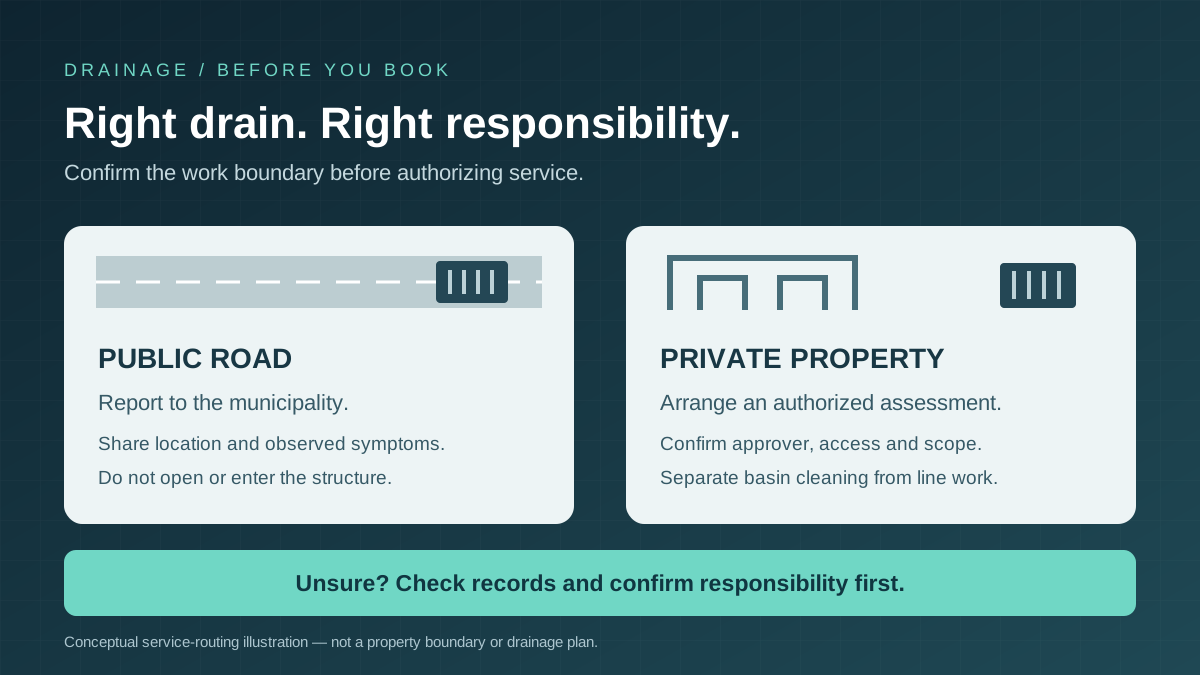
1. A catch basin in a public street appears blocked
Use the municipality's official drainage-reporting channel. Give the nearest intersection or address, the affected side of the road and the observed problem. In Coquitlam, the linked city guidance includes Engineering and Public Works contact details and a reporting link. For other municipalities, use that city's official website rather than assuming the same reporting process applies.
Do not authorize a private contractor to open or work on public infrastructure without the required authority. Stay out of moving traffic and floodwater. Never lift heavy grates, enter a basin or reach into an inlet. Report anything that cannot be safely addressed from an accessible, dry location.
2. A drain inside a strata or commercial property is overflowing
Contact the strata manager, facilities manager or other person authorized to arrange service. Identify the private catch basins or channels affected, any threatened entrances, and the available access route. An authorized representative can discuss catch basin cleaning and decide whether the initial scope needs line assessment as well.
A townhouse road can look like a public street while being privately maintained. Conversely, a structure near a property's entrance may connect to infrastructure with a different maintenance responsibility. Check site records rather than relying on appearance, a painted marking or a property's street address.
3. Water is backing up on both sides of the property boundary
Report the public-side symptoms to the municipality and tell the private service provider what is happening on site. Note whether multiple drains rise together and whether water subsides after rain eases. Avoid diagnosing a specific blockage from these observations alone. A downstream restriction or capacity issue may require coordination; cleaning one private basin is not a guarantee against further flooding.
Confirm the work boundary before booking
- Check available records: site drainage plans, prior service reports and strata maintenance records can help identify structures and connected routes.
- Identify the approver: confirm who can authorize inspection or cleaning and who must approve additional work.
- Ask when uncertain: contact the municipality or responsible property representative to clarify maintenance responsibility. A map is a starting point, not blanket permission to work.
- Define the stopping point: specify which private structures and pipe sections are included, and what happens if the issue appears to extend beyond them.
This is a service-planning guide, not a legal opinion about property boundaries, easements or strata obligations. Resolve those questions with the appropriate records and responsible parties before approving work outside a confirmed scope.
Which private drainage service should you request?
You do not need to diagnose the pipe before calling. Describe the symptoms and ask the provider to distinguish these tasks:
- Basin cleaning: removal of accumulated sediment and debris from the catch basin structure. This does not automatically include the entire storm line.
- Hydro jetting or line flushing: cleaning a suitable, accessible connected pipe where assessment supports it. Suitability depends on pipe condition and the obstruction.
- Camera inspection and private locating: useful for recurring symptoms, unknown routes or suspected defects. Debris, standing water and access limits may prevent a complete view.
- Further assessment: damage, poor surface drainage or a downstream problem may need a different scope rather than another routine cleaning.
If the basin was recently serviced, explain exactly what was cleaned. Our guide to a cleaned catch basin still holding water explains why retained water alone is not enough to select the next service.
What to include in a private service request
Start a private service request with your name and phone number. You do not need a complete checklist to get in touch. If available, add your city, site address, authority to arrange work, affected drain locations and observed symptoms. Safe photos, approximate basin count, previous reports and any municipal reference number can help with follow-up. Do not delay an urgent phone discussion while trying to collect every item.
Include gates, height restrictions, loading schedules, resident access needs and places that must remain clear. Ask the quote to separate basin cleaning, line work and inspection, with approval required for additional scope. Keep the results in a commercial storm-drain maintenance record so the next provider knows what was actually completed.
For recurring seasonal work, use a commercial catch basin maintenance plan rather than treating each leaf-related blockage as an isolated callout. The interval should reflect site observations and service findings—not a universal cleaning promise.
When water is threatening a building
Keep people away from floodwater, open structures, electrical hazards and unsafe vehicle routes. Phone to discuss response availability; do not rely on a routine web form for immediate attendance. If there is immediate danger to people, contact emergency services. Do not attempt to pump potentially contaminated water into another drain or use chemicals to clear a storm line.
Common questions
Will the city clean our private parking-lot drains?
Do not assume municipal street maintenance includes private-property drains. Confirm responsibility with the municipality and property representative, then arrange the authorized scope.
Can a contractor determine ownership with a camera?
A camera can help assess accessible pipe condition; it does not establish legal ownership or maintenance obligations. Plans and confirmation from responsible parties may still be needed.
Should we wait for the city before calling about private flooding?
You can report public-side concerns and discuss private-site assessment in parallel. Tell each party what has been reported, and do not approve work beyond the confirmed authority or boundary.
Private-property drainage
Confirm the site. Describe the problem. Scope the service.
Lowermainland Catch Basin Service can discuss private catch basin cleaning, hydro jetting and inspection in Port Coquitlam, Coquitlam, Burnaby, New Westminster and other listed Lower Mainland areas. Availability and equipment suitability must be confirmed.