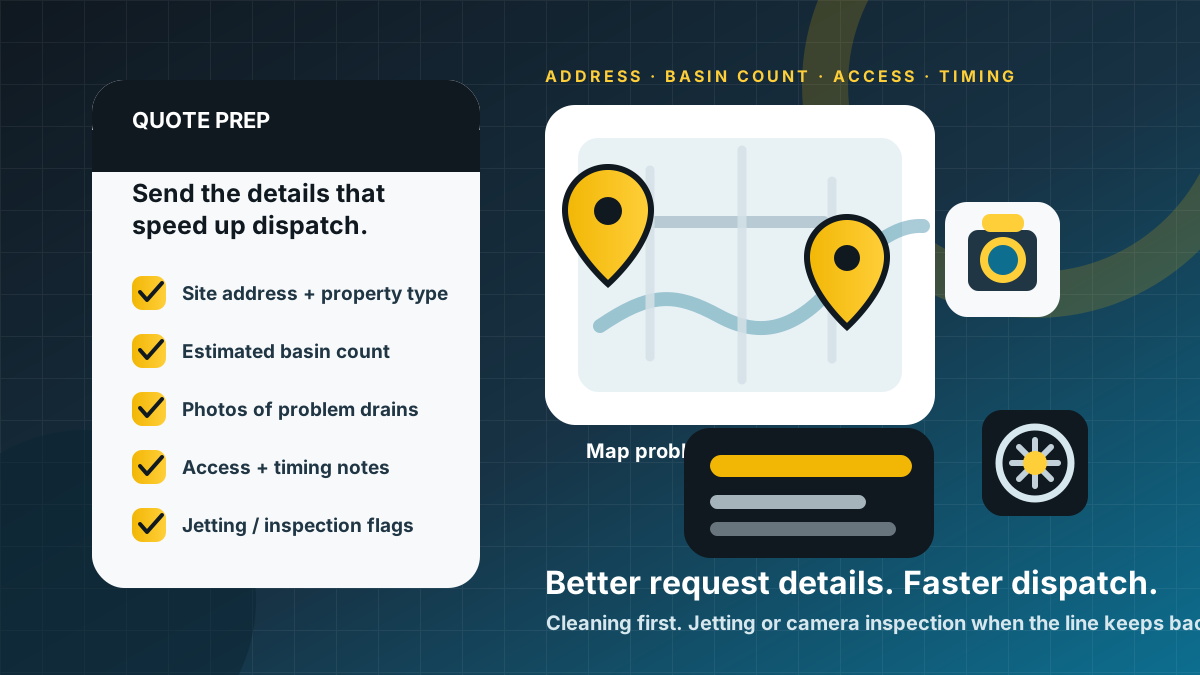
When a strata, retail plaza, industrial yard or commercial property needs catch basin cleaning, the fastest quotes usually come from clear site details. The goal is not to diagnose every pipe problem yourself. It is to give the drainage crew enough information to understand the scope, prepare the right service combination, and flag any access or timing issues before a rainy week turns scheduled maintenance into an urgent callout.
1. Start with the property and urgency
The first decision is whether the request is planned maintenance or a live drainage problem. A routine annual cleanout can usually be scheduled around tenants, gate access and waste-handling requirements. Active flooding near doors, loading bays, parkade ramps or electrical rooms should be treated as urgent.
- Property type: strata complex, parkade, retail plaza, industrial yard, school, church, warehouse, construction site or municipal-style private roadway.
- Urgency: planned maintenance, pre-rain cleaning, slow-draining basin, active pooling, or water moving toward a building.
- Primary risk area: parking lot low point, loading bay, parkade ramp, trench drain, curb inlet, catch basin grate or storm line outlet.
If the site is already flooding, phone first. For scheduled work or quote preparation, the service request form is useful because it lets you include notes, photos and access details in one place.
2. Count the basins as closely as you can
A basin count is one of the most useful quote details. It does not have to be perfect, but it helps estimate time on site and whether the visit is a small parking-lot cleanout, a full commercial maintenance route, or a larger strata / industrial job.
Walk the property safely from the surface only. Do not enter confined spaces, remove heavy grates without proper equipment, or lean into structures. Count visible catch basin grates, side inlet basins, trench drain sumps and problem low points. If you are not sure whether an inlet counts, take a photo and include it with the request.
3. Describe what is happening at each problem location
Two sites can both ask for catch basin cleaning but need different service scopes. One basin may be packed with leaves and sediment. Another may be empty but still backing up because the outlet line is restricted downstream. Details about symptoms help separate normal cleaning from a possible jetting, inspection or repair-planning visit.
- Water sits over the grate after normal rain.
- Water pools only during heavy rain but drains slowly afterward.
- Sediment, needles, leaves, garbage or gravel are visible through the grate.
- The same basin has been cleaned before but backs up again.
- Water is near a doorway, parkade ramp, loading bay, elevator pit, electrical room or tenant entrance.
- There is a visible sinkhole, broken frame, damaged grate, collapsed asphalt edge or suspected pipe problem.
For repeat drainage issues, include whether the basin was recently serviced. The next step may be hydro jetting or camera inspection after a cleaned basin still holds water.
4. Include photos that show context, not just the grate
Photos help a quote request because they show access, slope, risk and whether the basin is in a simple open lot or a constrained parkade. Take wide photos first, then closer photos of the grate or pooled water.
- Wide location photo: show the building, lot, lane or ramp so the basin is easy to find.
- Problem close-up: show sediment, standing water, clogged grates or debris rings.
- Access photo: show gates, bollards, speed bumps, parkade entrances, loading areas or height restrictions.
- Route photo: show where a service vehicle can park without blocking tenants, emergency lanes or loading operations.
Avoid sending photos with readable customer documents, private notices or unrelated personal information. The useful part is the drainage condition and access path.
5. Note access, timing and site restrictions
Access can affect the visit as much as the number of basins. A surface parking lot with open access is different from a gated strata, low-clearance parkade, locked service lane or busy retail plaza that needs work before opening hours.
- Gate codes, lock-box notes or property manager contact instructions.
- Parkade height limits, ramp slope and whether a truck can reach the drain location.
- Preferred service windows: early morning, daytime, after-hours, weekend or before a forecasted rain event.
- Tenant, customer or truck-traffic constraints around loading bays and storefronts.
- Any site safety rules, sign-in process or escort requirement.
For strata and commercial sites, these details help turn a vague “please quote catch basin cleaning” request into something dispatch can act on without several back-and-forth emails.
6. Ask when cleaning should be combined with jetting or inspection
Catch basin cleaning removes sediment and debris from the basin sump. If the outlet pipe or downstream storm line is plugged, the basin can still drain slowly after the sump is cleaned. That is when hydro jetting / line flushing may be needed to clear the line, and camera inspection and locating may be useful for repeat backups, root intrusion, offset pipe joints or suspected damage.
Good quote-prep language is simple: “Please quote basin cleaning, and advise whether jetting or camera inspection should be included if the outlet is slow.” This avoids locking the request into the wrong service when the real issue is downstream.
7. Do not guess pricing — provide the factors that affect scope
Online price ranges can be misleading because site conditions vary. A better approach is to provide the factors that influence scope: basin count, sediment load, access, removed-material volume, travel area, timing, urgency, whether line flushing is required, and whether inspection or repair planning may be needed. The commercial catch basin cleaning cost-factors guide explains how those details fit together without inventing a one-price-fits-all number.
For recurring commercial or strata maintenance, the commercial catch basin maintenance page explains how scheduled cleaning can be planned around annual, pre-fall or high-risk site needs. For urgent water pooling, the emergency storm drain cleaning page is the better next step.
Example quote request you can copy
Lower Mainland service-area details to include
For quotes in Vancouver, Burnaby, Richmond, Surrey, Coquitlam, Port Coquitlam and nearby communities, include the exact site address and any route notes that affect access. Different municipalities and property layouts can change parking, traffic timing and site-entry planning.
If your team is building a recurring plan rather than a one-time quote, use the property manager maintenance schedule guide to decide whether annual, pre-fall, spring or quarterly checks make sense.
Ready to request service?
Send the basin count, photos and access notes in one request.
Lower Mainland Catch Basin Service handles catch basin cleaning, storm drain service, hydro jetting, camera inspections and drainage repair support for Lower Mainland commercial, strata and industrial properties.