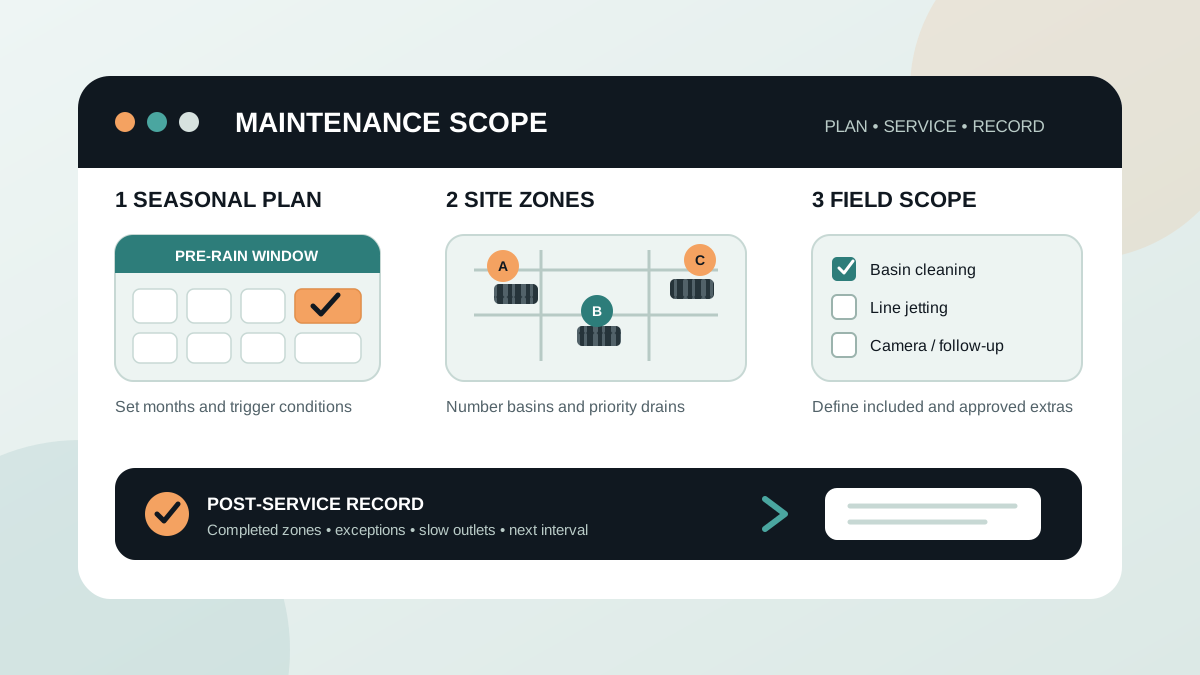
A recurring commercial catch basin maintenance plan should do more than reserve a vague annual visit. For a strata complex, retail plaza, warehouse, parkade or industrial property, the useful document is a clear service scope: which drains are included, when they are checked or cleaned, what triggers extra line work, how the crew reaches each area, and what the property manager receives afterward.
Why define the maintenance scope before fall rain?
Late summer is a practical planning window in the Lower Mainland. Property teams can walk parking lots, loading areas and parkade ramps in dry conditions, identify the drains that filled during the last wet season, and arrange access before leaf debris and repeated rain make scheduling more urgent.
Recurring service is most valuable when it reduces guesswork from one visit to the next. The crew should know which basins are routine, which locations threaten doors or operations, and which outlets have a history of slow flow. The property manager should know what is included in the planned visit and what requires a separate decision.
1. Build a basin and drain inventory
Start with a simple site list rather than relying on “all drains” as the scope. Count visible catch basins from the surface and group them by zone. Include trench-drain sumps, ramp drains or other collection points only when they are actually part of the requested work.
- Surface areas: visitor parking, rear lot, service road, garbage enclosure, drive aisle and landscaped low points.
- Operational areas: loading bays, warehouse aprons, fuel or equipment areas and truck entrances.
- Building-risk areas: parkade ramps, lower levels, pedestrian entrances, doors and low points near electrical or mechanical rooms.
- Identification: assign a simple number or zone name so photos, findings and future requests refer to the same location.
A rough map, marked aerial image or numbered photo set is often enough. Do not enter catch basins or remove heavy grates without the training and equipment required for the site.
2. Separate routine catch basin cleaning from storm-line work
Catch basin cleaning removes accumulated water, sediment, leaves, gravel and debris from the basin sump. It does not automatically mean every connected storm line has been hydro jetted or inspected by camera. A recurring scope should say which work is standard and which work is added only when a condition is found.
- Routine basin scope: identify the basins, remove accumulated material, expose the outlet area where practical, and note visible grate, frame or drainage concerns.
- Hydro jetting / line flushing: define whether outlet flushing is included, limited to specified lines, or quoted separately when a cleaned basin still drains slowly.
- Camera inspection: reserve CCTV work for repeat backups, unknown routes, suspected damage or a repair decision that needs better evidence.
- Drainage repair: treat broken frames, collapsed pipe, sinkholes or failed private drainage components as findings that need a separate repair review, not as assumed cleaning work.
3. Set frequency by site conditions and consequence
A single interval does not fit every Lower Mainland property. Use prior sediment levels, tree cover, vehicle traffic, nearby construction, yard material and flood consequence to decide which zones need attention most often. The catch basin cleaning frequency guide explains the annual-versus-more-frequent decision in more detail.
- Annual or pre-rain service: a practical baseline for many normal commercial and strata sites with stable conditions.
- Spring plus late-summer checks: useful where winter sediment and fall leaf debris create different maintenance needs.
- More frequent high-risk checks: consider them for loading bays, industrial yards, construction-adjacent areas, heavily treed lots and drains protecting low building entrances.
- After-event review: inspect the known trouble spots after unusually heavy rain, paving, landscaping, excavation or a spill response, even if the regular visit was recently completed.
Write the planned months or trigger conditions into the scope. “Twice per year” is less actionable than “spring condition check and late-summer cleaning, with extra work approved only if site conditions require it.”
4. Confirm access, staging and service windows
Access details affect whether a planned visit is efficient. Include gate instructions, site contacts, parking restrictions, traffic-control expectations and any tenant notice required. For parkades, give the posted clearance and identify which drains are reachable from the surface or require a different equipment approach.
- Preferred dates and hours, including quiet hours or loading schedules.
- Gate, lock-box, escort and sign-in procedures.
- Safe staging areas and routes between basin zones.
- Parkade height, ramp grade, hose distance and ventilation or building rules.
- Areas that must stay open for customers, residents, deliveries or emergency access.
If the property has several distinct access conditions, request zone-by-zone planning rather than assuming one setup works everywhere.
5. State how removed material and unusual findings are handled
The maintenance scope should say who is responsible for removing material from the site and how disposal-related charges are presented. It should also define what happens if the crew finds unusual odour, sheen, suspected contamination, sharp debris, excessive sediment or another condition that changes the safe scope.
Do not instruct staff to flush sump material into the outlet pipe. The purpose of basin cleaning is to remove accumulated material from the collection point, not push it farther into the private storm system.
6. Ask for useful post-service records
Documentation does not need to become a complicated engineering report. It should help the next property manager, strata council or service crew understand what was done and which locations need follow-up.
- Date, property and zones serviced.
- Basins or drains completed, skipped or inaccessible.
- Notable sediment, debris or standing-water conditions.
- Slow outlets, damaged grates, cracked frames or suspected pipe issues.
- Photos or location notes for exceptions and recommended follow-up.
- Suggested next interval based on what was actually found.
Use the same basin numbers every visit. Over time, consistent records show whether one location fills much faster than the rest and whether repeated cleaning is masking a downstream restriction.
7. Define urgent work and out-of-scope approvals
A planned maintenance agreement is not automatically an emergency-response guarantee. Ask how active flooding requests are handled, what contact path should be used, and whether after-hours work, traffic control, additional equipment or line work requires separate authorization. If water is already moving toward a building or active work area, call rather than waiting for the next scheduled visit.
The agreement should also identify the person allowed to approve extra work. That prevents delays when the field finding is clear but the onsite contact does not have purchasing authority.
8. Compare proposals on the same field scope
Two maintenance prices are not comparable if one covers basin cleaning only and the other includes line flushing, difficult access or more complete documentation. Before comparing totals, line up the assumptions:
- Same number and type of basins or drains.
- Same planned service frequency.
- Same access hours and site constraints.
- Clear inclusions for flushing, jetting, inspection and material handling.
- Clear process for inaccessible drains and extra-work approval.
- Same expectations for post-service records.
For initial budgeting, review the commercial catch basin cleaning cost factors. For a faster first request, use the quote-preparation checklist.
Multi-site and strata portfolio planning
Property managers with several Lower Mainland sites can use one standard worksheet while keeping each site’s risk and access notes separate. Include the property address, local contact, basin count, priority drains, last service date and preferred maintenance window. Grouping nearby work may make scheduling easier, but do not let a portfolio template hide a high-risk ramp or loading bay that needs a different interval.
For strata properties, record the approval contact and any council or building-notice lead time. For commercial sites, note store opening hours, loading windows and contractor sign-in rules. For industrial yards, identify active operations, sediment sources and zones that cannot be blocked during production.
Sample maintenance request
Lower Mainland areas to include in your request
Provide the exact property address and site contact whether the work is in Port Coquitlam, Coquitlam, Burnaby, Vancouver, Richmond, Surrey, Langley or another serviced Lower Mainland community. Address, access and basin count are more useful for scheduling than a city name alone.
Plan recurring service
Request a clear catch basin maintenance scope before the wet season.
Send the site address, basin count, high-risk zones, access notes and preferred maintenance window. Lower Mainland Catch Basin Service can help scope catch basin cleaning, storm-line jetting, camera inspection and drainage follow-up for commercial, strata and industrial properties.