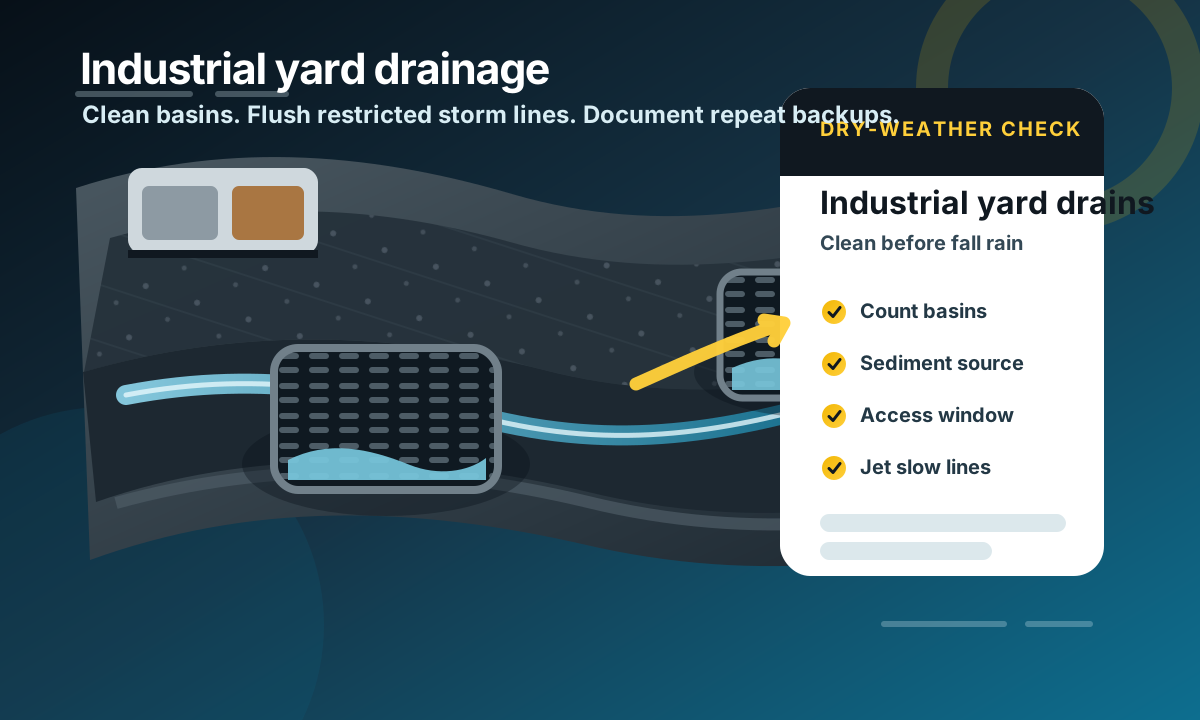
Industrial yards, service yards, warehouses, equipment compounds and trade contractor lots often drain differently from retail parking lots or strata roads. The catch basins may sit at loading routes, fence lines, gravel transitions, washdown areas or low corners where trucks turn. When the basin sump fills, sediment can move into the outlet line and create a repeat backup that routine surface cleanup does not solve.
Why industrial yard drains need a different checklist
A normal parking stall drain usually collects leaves, sand, garbage and surface runoff. Industrial yards can add heavier material: road grit from delivery trucks, crushed gravel, soil tracked from equipment, concrete or asphalt dust, pallet fragments, packaging, metal fines, landscaping mulch and sediment from roof leaders or washdown areas. That material settles quickly in catch basin sumps and can pack into outlet lines.
The result is not always dramatic at first. A grate may look clear while the sump below is full. Water may leave slowly after light rain but overflow during a long storm. One basin may back up because the downstream storm line serving multiple yard drains has narrowed with sediment. This is why a dry-weather inspection is useful before the first major rain system.
Use the July dry window to check the whole drainage path
July is a practical planning month because yard access is usually easier, standing water is lower, and maintenance teams can see sediment rings, broken grates, sunken asphalt and debris trails. Use that window to create a simple site note before requesting service.
- Count the drains: list catch basins, trench drains, low-point grates, loading-area drains and any storm sumps inside the yard.
- Mark high-risk locations: note drains near overhead doors, tenant entrances, electrical or mechanical rooms, inventory, pedestrian routes and truck gates.
- Identify debris sources: gravel, soil, leaves, roof runoff, washdown sediment, construction dust, sweeping piles or material tracked from adjacent yards.
- Check access: gate codes, equipment staging space, truck turning room, overhead clearance, parked trailers, shift changes and delivery blackout windows.
- Document repeat issues: which drains backed up last fall, which basins were cleaned recently, and whether water came back after cleaning.
When to phone first instead of sending a scheduled request
Use the online request path for planned industrial yard cleaning, pre-fall maintenance and non-urgent scope notes. Phone first when water is active, moving toward a building, blocking a busy route or threatening business-critical areas.
- Call first: water moving toward doors, tenant spaces, loading docks, electrical rooms, mechanical areas, inventory, fuel or chemical storage areas, public sidewalks or active truck routes.
- Request online: full basins, slow yard drains after rain, annual or twice-yearly cleaning, quote prep, or a repeat problem that is not actively flooding.
- Send photos safely: include the grate, surrounding pavement, sediment line, access route and any visible downstream drainage features. Do not remove heavy lids or enter confined drainage spaces.
If the site has active water moving toward a building or safety-sensitive area, the emergency storm drain cleaning page outlines the dispatch details to have ready before calling.
What catch basin cleaning should remove from an industrial yard
The first goal is to restore sump capacity. A catch basin is designed to collect material before it enters the storm line. If the sump is full, water has less room to drop sediment, and the outlet can start carrying grit downstream. Industrial sites with gravel edges, unpaved transitions, construction traffic or heavy sweeping loads often need more frequent cleaning than low-traffic commercial lots.
A useful service scope usually groups related drains instead of treating one grate in isolation. Yard low points, loading bay drains, nearby loading bay drains, parking-lot basins and fence-line drains may share the same private storm route. Pairing the yard visit with a commercial catch basin maintenance plan makes it easier to track which basins fill fastest.
When storm line flushing or hydro jetting should be added
Hydro jetting is worth discussing when water remains high after the sump is cleaned, when several drains along one side of the yard back up together, when sediment returns quickly after cleaning, or when an outlet is suspected to be packed with gravel, roots or compacted silt.
Industrial yards often have long, flat private storm runs. If those lines hold sediment, cleaning only the basin may restore some capacity without restoring the flow path. The hydro jetting versus catch basin cleaning guide explains how to decide whether the issue is in the basin, the outlet or the downstream line.
When camera inspection or drainage repair planning is the next step
A camera inspection becomes useful when the same yard drain repeats after cleaning and jetting, when old site drawings do not match the drainage route, or when the property owner needs evidence before approving a repair. The camera may show a belly holding sediment, root intrusion, an offset joint, a crushed section, a broken pipe, a buried cleanout or a connection that runs somewhere unexpected.
If the line condition points to a defect, the next decision may involve drainage repair planning. That does not mean every slow industrial yard drain needs excavation. It means repeat problems should be documented before the site keeps paying for temporary cleanouts without understanding why the same basin keeps filling.
Lower Mainland industrial yard situations that deserve extra attention
Different areas bring different drainage patterns. Industrial and warehouse sites in Surrey, Delta and Langley often have large paved yards, gravel transitions and heavy truck movement. Flat sites in Richmond may show ponding quickly when outlets slow down. Older commercial and light-industrial yards in Burnaby, New Westminster and Vancouver may have legacy storm lines with unknown routes. Yards around Port Coquitlam and Coquitlam can mix industrial traffic with treed edges, steep grades or parkade/loading-area drainage.
The practical priority is the same everywhere: clean the basins that protect buildings and traffic routes first, then document the lines that keep backing up.
A sample service request note for an industrial yard
That kind of note gives enough context to plan the visit without pretending to diagnose the pipe from a distance. It also helps separate routine cleaning from a possible jetting or inspection need.
What to send before you request service
Before you request service, gather the details that help dispatch understand the site and prioritize the right equipment:
- Property address, city, gate or yard entrance and best truck staging area.
- Approximate number of catch basins, trench drains, low-point grates and nearby loading bay drains.
- Photos of grates, pooling, sediment trails, access routes and any water line on walls, doors or pavement.
- Whether the issue is active now, drains slowly after rain, or only backs up during long rain.
- What water threatens: doors, inventory, tenants, electrical or mechanical rooms, truck routes or public access points.
- Recent sweeping, grading, construction, paving, landscaping, washdown activity or previous cleaning and jetting history.
FAQ: industrial yard catch basin cleaning
How often should industrial yard catch basins be cleaned?
Many commercial sites schedule annual service, but industrial yards with gravel, heavy trucks, construction activity, landscaping debris or repeat ponding may need twice-yearly cleaning or a pre-fall check. The catch basin cleaning frequency guide covers the basic schedule.
Do all industrial yard drains need hydro jetting?
No. If the basin sump is full, catch basin cleaning may be the practical first step. Jetting becomes more relevant when the basin is clean but water remains high, several drains back up together, or the outlet line is suspected to hold sediment or roots.
Can cleaning be scheduled around operating trucks?
Often, but access details matter. Send gate codes, shift times, delivery windows, parked-trailer constraints, clearance notes and the safest service-truck staging location. Good access notes reduce the chance of a delayed or incomplete visit.
When should a repeat yard drain be inspected by camera?
Use camera inspection when the same drain keeps backing up after cleaning and jetting, when the drainage route is unknown, or when repair planning is being discussed. The cleaned-but-still-holding-water guide explains those triggers in more detail.
Do not wait for the first fall storm to find the weak low point
Industrial yard backups create operational problems fast: blocked truck routes, tenant complaints, wet loading zones, safety issues and water moving toward buildings. A dry-weather cleaning and scoping request is usually easier to schedule than an active-water call during the first heavy rain week.
Industrial yard drains filling with sediment?
Request catch basin cleaning, storm line flushing or inspection before fall rain.
Lower Mainland Catch Basin Service helps commercial and industrial properties with catch basin cleaning, storm drain maintenance, hydro jetting / line flushing, camera inspections, private drainage locates and drainage repair coordination.