Why winter drainage problems look different here
Lower Mainland snow rarely lasts long. A typical pattern is a short cold snap, then a quick turn to rain. Ploughed snow sits in large piles while rain falls on top of it. Packed snow, slush and sand can then cover grates in strata lanes, retail lots and loading areas, at the moment drainage matters most.
Cities ask residents to help. The City of Port Coquitlam's catch basin guidance asks people to keep nearby drains and catch basins clear of leaves, snow and ice, and to clear a path for water to reach them. Public street drains remain the municipality's job. On a private strata or commercial site, the catch basins, trench drains and private storm lines are normally the owner's responsibility. That is why a winter plan helps, and our city vs private storm drain guide explains how to tell the difference.
1. Mark catch basins before the first snowfall
Once a grate is buried, it is hard to find. Before winter, list every private catch basin, trench drain and low point on your site plan, and give each one a simple label such as “Basin 3, visitor parking.” Share that list with your snow-clearing contractor and site staff.
- Note which basins sit at the lowest points where meltwater will collect.
- Use markers that are easy to see and suited to the site. They must not create a trip hazard or obstruct traffic.
- Check whether the basins already hold leaves or sediment from fall. A basin that is already full has less room for winter grit.
- Record drains that pooled during fall rain, because they are the most likely to fail in a thaw.
If the basins have not been serviced since leaf drop, consider catch basin cleaning before the cold snap. It gives the sumps space for the sand and grit that winter maintenance adds.
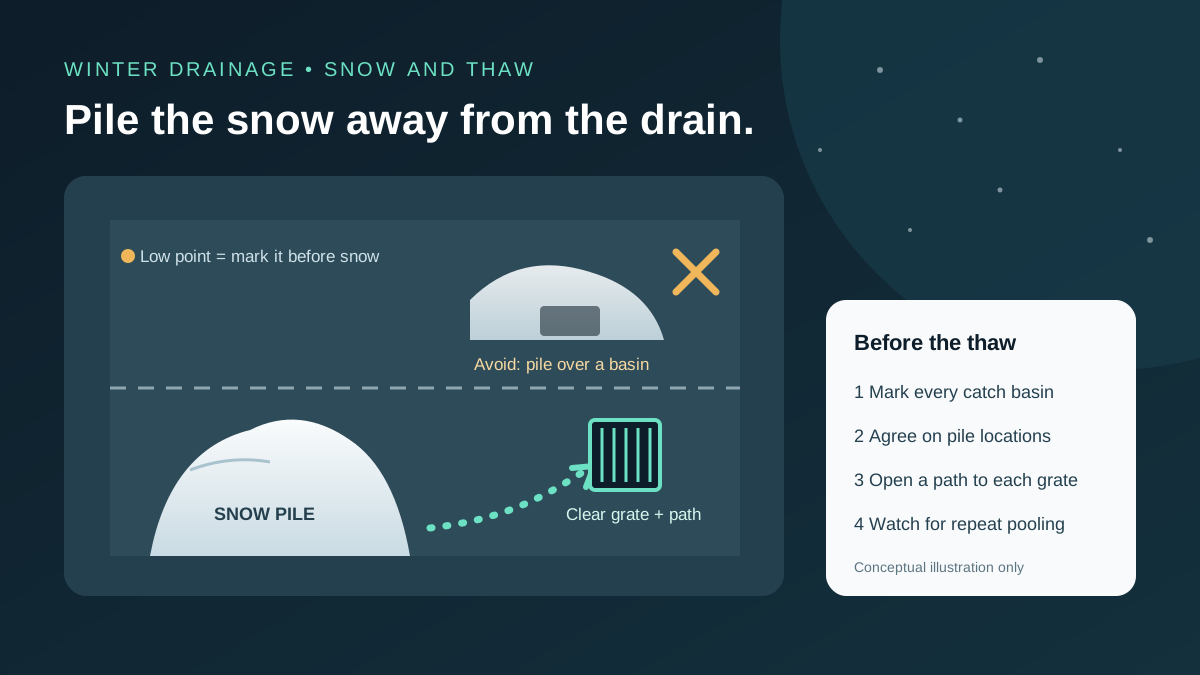
2. Agree on snow pile locations that do not bury drains
Snow pile placement is the decision that matters most in winter. Ask your snow-clearing provider to keep piles off catch basins, trench drains and the paths that carry water to them. A pile placed just uphill of a basin can also be a problem, because it sends slush and grit straight into that basin as it melts.
- Choose pile areas on landscaped or level ground where meltwater will not run across walkways or into building entrances.
- Keep loading bays, parkade ramps and accessible parking clear of large piles.
- Avoid placing piles on top of grates in parkade entrances, where a blocked drain can quickly send water down the ramp.
Write the agreed locations into the snow-clearing scope, so the decision does not depend on whoever is driving the plough that night.
3. Open a safe path to each basin before the thaw
When the forecast changes from snow to rain, clear the grates you can reach safely and open a path for water to reach them. Use a shovel or a similar tool from a stable position. Do not use bare hands, and do not stand in moving traffic or deep water.
- Clear snow and slush from the top of the grate only. Do not lift grates or reach into a basin.
- Do not chip at ice on a grate with tools that could damage it, and do not pour hot water onto ice.
- If a basin is under deep, fast-moving or pooled water, keep people away from it and call for help instead.
Salt and sand help with traction, but they also end up in your drains. Use only the amount needed, and keep stockpiles covered and away from grates. The Metro Vancouver stormwater overview explains that most street drains lead to local streams, rivers or the ocean, so avoid washing sediment and debris into them.
4. Watch for these warning signs after a thaw
Once the snow is gone, check the site during the next rainfall. A clear grate with water still pooling around it is usually not a snow problem.
- Water stands around a grate that you have already cleared.
- Pooling returns in the same low spot after each rainfall.
- Water drains slowly from a trench drain at a parkade ramp or loading bay.
- Sand, grit or slush is visible inside the basin when you look through the grate.
- You notice odours, gurgling or water rising from a basin downstream.
These signs suggest the basin sump is full or the line beyond it is restricted. Our guide to signs a catch basin needs vacuum cleaning describes the most common symptoms in more detail.
5. Book the right service after winter
Winter grit, sand and salt residue settle into catch basin sumps. Removing that material by vacuum is often the first step after a snowy period. If a drain is still slow once the basin has been cleaned, hydro line jetting can clear the connected pipe. A camera inspection can then check for damage, root intrusion or a sag before any repair decision. Cleaning can remove debris, but it does not repair a damaged pipe or increase the capacity of a drainage system.
If you manage several sites, a commercial catch basin maintenance plan can schedule a post-winter visit alongside fall service. Recording what was removed and where in the storm drain maintenance record helps you compare each season.
A short winter checklist for property managers
- Before snow: mark catch basins, share the drain list and agree on pile locations with your snow contractor.
- During snow: keep grates and loading areas clear where it is safe to do so.
- Before the thaw: open paths to the grates, and keep sand and salt stockpiles covered.
- After the thaw: look for repeat pooling, then book cleaning, jetting or an inspection.
- Spring: remove winter grit from sumps and update the maintenance record.
Common winter drainage questions
Can you clean a catch basin while there is snow on the ground?
Sometimes. It depends on safe access to the basin, the ground and weather conditions, and where the truck can be positioned. Ice, deep slush or snow piles may mean the work has to wait or be done in phases. Equipment and scheduling must be confirmed for each site.
Who clears a buried catch basin on a strata road?
On a private strata road or lot, the strata or property owner usually arranges snow clearing and drain maintenance. Public street drains belong to the municipality. If you are unsure who owns a drain, check with your city before booking service.
Is road salt a problem for catch basins?
Salt dissolves, but traction sand and grit settle into the sump and add to the sediment already there. That is one reason many properties book an inspection or cleaning after a snowy winter.
If water is pooling now and threatening a building, see our emergency storm drain cleaning page or the parking-lot flooding guide.
Post-thaw drainage service
Is water still pooling after the snow is gone?
Tell Lowermainland Catch Basin Service the city, approximate number of catch basins, where the water pools and when you need service. We serve Port Coquitlam, Coquitlam, Burnaby, Surrey, Vancouver and other listed Lower Mainland areas. Access, equipment and appointment times must be confirmed.