Why investigate before repeated fall rain?
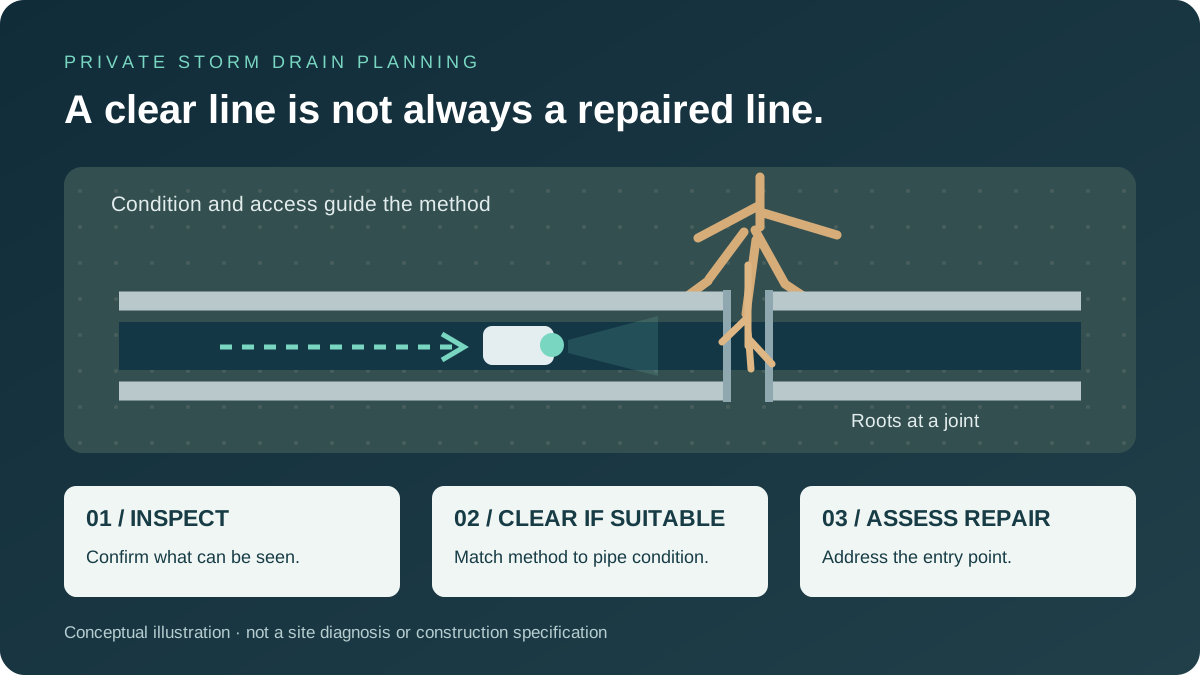
When a private storm drain repeatedly backs up, clearing leaves from the grate may only address the visible part of the problem. Roots can enter at vulnerable joints or defects and obstruct flow. Sediment, a displaced pipe, poor surface grading or a downstream capacity issue can produce similar symptoms.
The City of Coquitlam's flood protection guidance identifies tree roots and debris as possible drain-pipe blockage causes. It also notes that runoff can exceed drainage capacity in extremely heavy rain. Neither a tree beside the lot nor a single puddle proves root intrusion. This guide is seasonal planning advice, not a current storm alert.
Clues worth including in the service request
- The same drain slows down again after service. Explain whether the previous visit cleaned the basin, flushed the connected pipe or included a camera inspection.
- More than one connected inlet backs up. Describe which drains are affected and whether they appear to rise together. This can help scope the investigation, but does not locate a blockage by itself.
- A previous inspection reported roots or a joint defect. Share the report, footage and approximate location if available.
- There are mature trees near the suspected route. Note their position without assuming their roots are responsible or that removing a tree is necessary.
- The problem occurs only during intense rain. Record when it starts and how it subsides, from a safe place. Capacity and downstream conditions may need assessment too.
Do not lift heavy covers, enter a basin, reach into standing water or work in vehicle traffic. Keep people away from flooded access routes, open structures and electrical hazards. If water is threatening a building, phone to discuss response availability rather than waiting for a routine form reply. Immediate danger to people belongs with emergency services.
Basin cleaning and root-related pipe work are different jobs
Catch basin cleaning removes accumulated material from the structure. It does not automatically clean the entire connected storm line. If the restriction is farther along the pipe, emptying the basin may leave the cause unresolved.
Conversely, roots should not become the default explanation for every slow drain. An inspection may find ordinary sediment buildup or a blocked surface inlet instead. Ask the provider to distinguish what is observed from what remains suspected. For the broader service comparison, see hydro jetting versus catch basin cleaning.
Should a camera inspection come before hydro jetting?
For suspected roots, recurring backups or unknown pipe condition, discuss storm drain camera inspection and private-line locating before agreeing to a cleaning method. A camera may reveal accessible root intrusion, damaged joints or other visible defects. A locate can help relate an observed point to the surface when the equipment and site conditions allow.
There is no universal sequence. Standing water, heavy debris, access limitations or a complete blockage may prevent a useful view. The provider may recommend limited clearing to obtain access and then inspect again. Ask what can be confirmed at each stage and where visibility ends; an incomplete inspection should not be presented as proof that the whole line is sound.
When hydro jetting may help—and when it is not enough
Hydro jetting or line flushing can be considered for a suitable, accessible storm line after its condition and the obstruction are assessed. The equipment, pressure and method must suit the pipe and site. Some root masses require specialist cutting or another approach; do not assume that every jetting service includes root cutting.
- Suitable line with removable buildup: an agreed cleaning scope may help restore flow. Ask how the result will be checked.
- Roots entering through a defect: clearing may relieve the restriction without fixing the entry point. Discuss recurrence risk and a follow-up plan.
- Collapsed, displaced or otherwise unsuitable pipe: repeated high-pressure cleaning may not be appropriate. Request a drainage repair assessment.
- Unresolved high water or several affected drains: investigate the wider system instead of repeatedly cleaning one inlet.
Do not pour root-killing chemicals, herbicides or other improvised treatments into a storm drain. Coquitlam notes that catch basins eventually lead to environmentally sensitive waterways. Keep chemicals out of the storm system and discuss an appropriate physical assessment and service plan.
Confirm ownership before approving work
A private parking-lot pipe may connect to public infrastructure. The property boundary alone does not establish the maintenance responsibility for every segment. Use available plans and ask the municipality or property representative when ownership is uncertain. Report suspected public-road drainage problems through the municipality; private service should not extend into public infrastructure without the required authority.
For a strata or commercial site, identify who can approve the initial inspection and who must authorize extra cleaning or repairs. Keep those approvals separate. A service visit is not permission to excavate, remove a tree or alter the drainage route.
What to send for a useful assessment
Start with your name, phone number and city. Helpful details include the site address, affected drains, last service date, previous camera findings, safe photographs, access restrictions and the person authorized to approve work. Existing footage is useful even if it does not cover the entire line.
Ask the quote to distinguish basin cleaning, line cleaning, camera work, locating and any separately priced repair investigation. Agree on a stopping point if damage or an inaccessible section is found. Record what was serviced, what was observed and what still needs attention in the storm-drain maintenance worksheet.
Discuss private storm drain work in Port Coquitlam, Coquitlam, Burnaby and the other listed Lower Mainland areas. Availability and equipment suitability must be confirmed for the site.
Common questions
Does jetting permanently stop roots coming back?
No. Clearing an obstruction does not seal a joint or repair a defect. Inspection findings should guide whether monitoring, further cleaning or a repair assessment is appropriate.
Should we remove the tree first?
Do not make that decision from a backup symptom alone. Confirm the drainage issue and seek appropriate drainage and arboricultural advice. Tree work may also involve municipal requirements and separate authorization.
Can you quote from a photo of the grate?
A safe surface photo helps identify the site and access, but it does not show the condition of the connected pipe. Further assessment may be needed before defining root-related work.
A repeat backup needs a clearer scope
Tell us what was cleaned—and what came back.
Lowermainland Catch Basin Service can discuss basin cleaning, line jetting and camera inspection for your private drainage problem. Ask for an assessment before committing to another routine flush.